
Choosing the Right Cardstock for Inks, Stamping & Mixed Media
Choosing the right cardstock can make a real difference when you’re stamping, painting and working with water-based inks. But once you have the right surface, there’s also plenty of scope to experiment with how your inks behave on it.
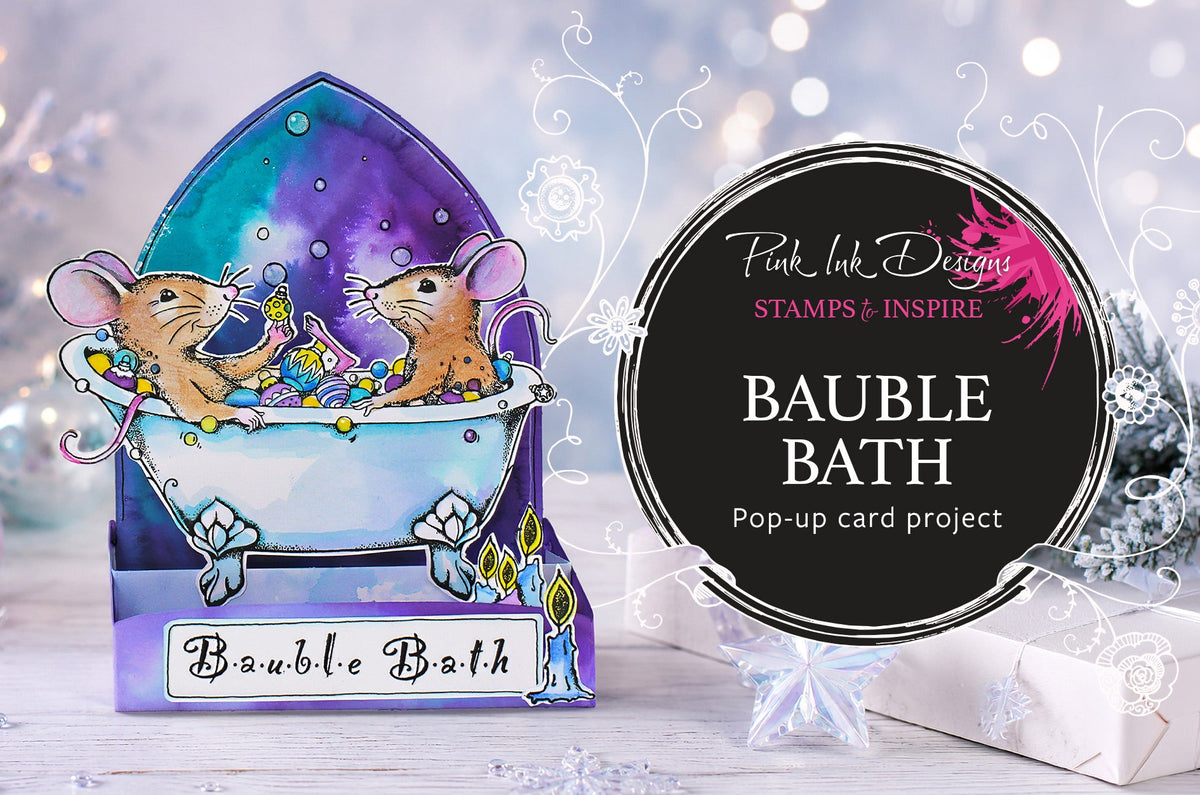
In these two informative videos, Cathie from Pink Ink Designs puts Cosmic Shimmer Ready to Stamp White Cardstock and Cosmic Shimmer Water-Based Inks through their paces. First, she explains why the properties of your cardstock matter, before experimenting with different ways to use our highly pigmented water-based inks to create colourful, one-of-a-kind backgrounds.
Why does your choice of cardstock matter?
Not all white cardstock behaves in the same way. Cathie compares Cosmic Shimmer Ready to Stamp White Cardstock with another 300gsm white cardstock, applying the same amount of water and Cosmic Shimmer Water-Based Ink to each.
Cosmic Shimmer Ready to Stamp White Cardstock is a smooth, brilliantly white 300gsm card made from eucalyptus pulp. Its smooth surface makes it particularly suited to stamping, painting and other ink-based techniques.
In the video, you can clearly see the difference as the inks are applied. On the more porous comparison cardstock, the colour is quickly absorbed and begins to seep through to the reverse. The Cosmic Shimmer cardstock allows the colour to remain on the working surface, giving you more time and control as the inks move and blend.
Cathie also explains why a very porous surface can affect stamped images, drawing the ink into the cardstock rather than allowing it to sit cleanly on the surface.
Watch the video to see Cathie compare the two cardstocks side by side.
Creating backgrounds with Cosmic Shimmer Water-Based Inks
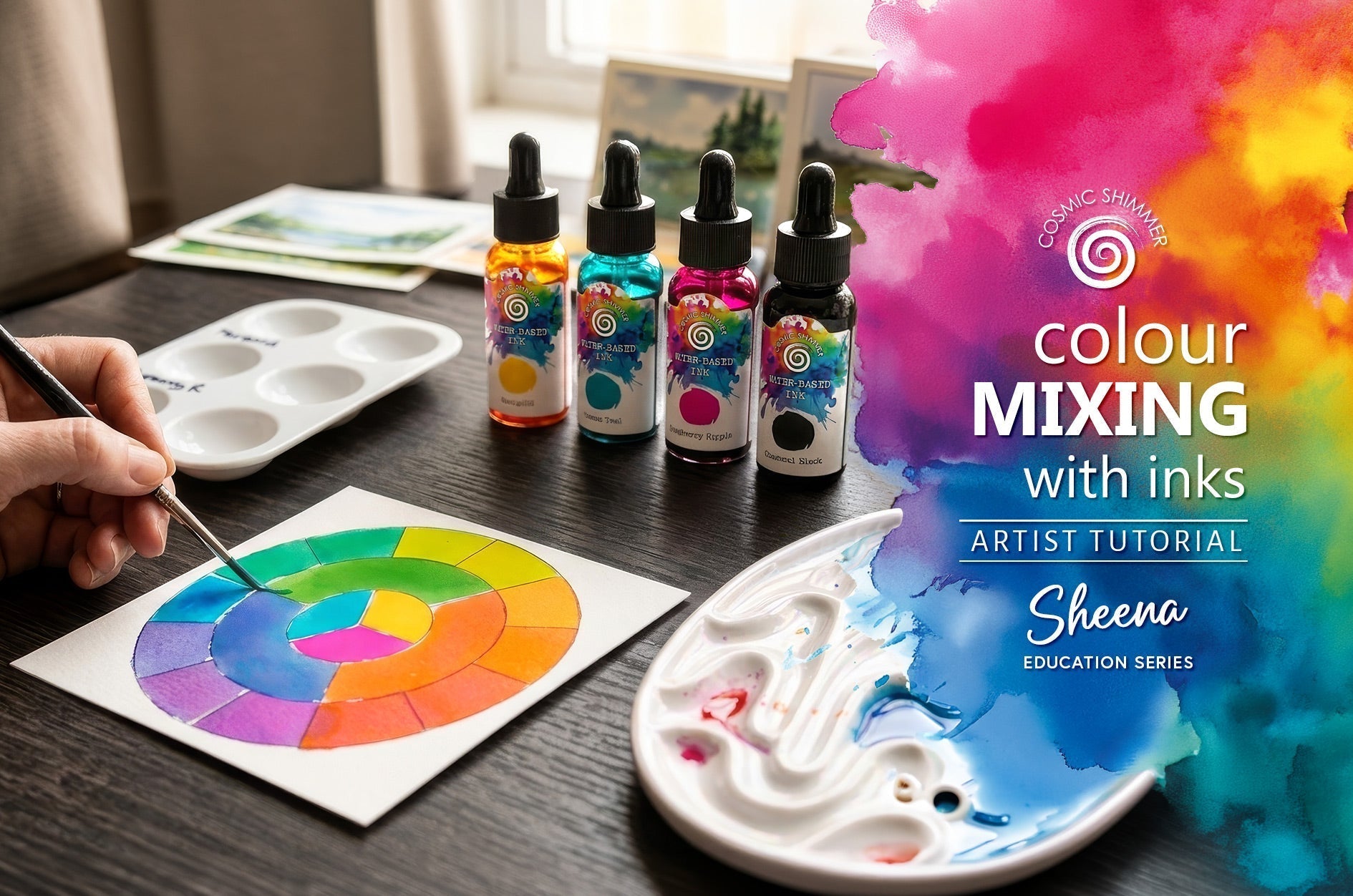
Once you’ve chosen your surface, it’s time to experiment! In our second video, Cathie uses Cosmic Shimmer Water-Based Inks to demonstrate several simple ways of creating expressive backgrounds. These highly pigmented liquid inks come with a pipette, making it easy to add colour directly to your work or decant a small amount onto a palette. Using just a few ink colours, Cathie shows just how varied the results can be.
Cathie begins by adding ink along the bottom of the cardstock before introducing clean water from above, allowing the colours to travel and blend through the damp surface. You can dry the background when you reach an effect you like or simply leave it and allow the pigments to continue moving as the cardstock dries.
She then experiments with wet-on-wet techniques, dampening the cardstock first before dropping the inks randomly into the water. The pigments naturally spread into one another, creating wonderfully organic colour combinations.
For a different effect, Cathie adds the inks to dry cardstock. As the liquid meets both wet and dry areas, the pigment creates branching, spidering patterns with much more defined movement.
Adjust, lift and experiment
One of the great things about working this way is that you don’t have to decide exactly how your finished background will look before you begin. If an area becomes too intense, Cathie demonstrates how some of the colour can be lifted with tissue while it is still wet. You can introduce additional water, move the cardstock to encourage the pigment to travel or add further drops of ink to develop the design.
Cathie also adds Cosmic Shimmer Iridescent Mica Powder to wet areas. The mica is caught by the moisture and pigment, adding metallic detail to selected areas of the background. Any loose powder that hasn't adhered can simply be brushed away once everything is dry.
Another clever technique uses circular objects placed onto the wet cardstock to restrict the movement of the ink. This can leave lighter areas within the background – useful when creating effects such as the glow around a candle, lantern or moon.
Watch Cathie demonstrate the different techniques and see how the backgrounds change as they dry.

Subscribe to our Newsletter
The latest products, offers and events delivered right to your inbox.